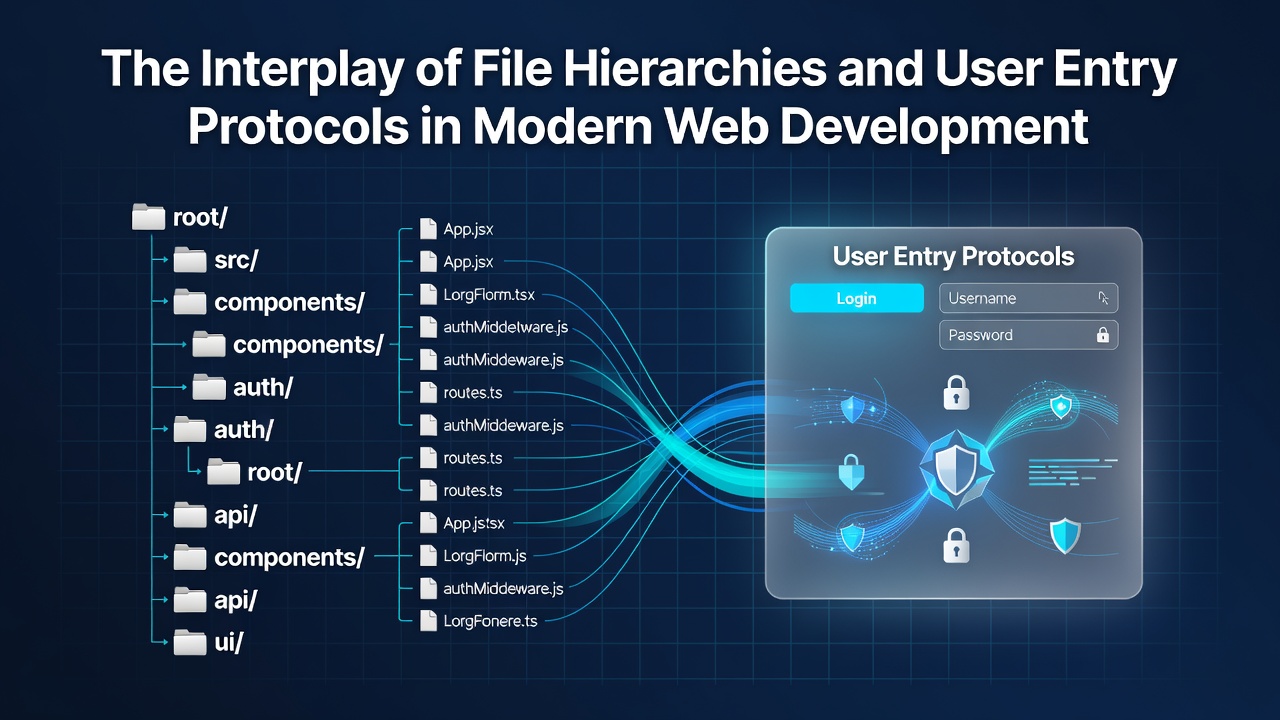
The Interplay of File Hierarchies and User Entry Protocols in Modern Web Development
Modern web development relies on structured file hierarchies that organize assets, components, and configuration files while user entry protocols define the precise mechanisms through which requests reach those resources, and the two systems interact continuously to shape application behavior. Researchers at institutions such as Carnegie Mellon University have documented how directory nesting patterns directly influence routing efficiency and resource resolution times across distributed server environments. Data from industry reports compiled in August 2026 indicate that frameworks built on modular file structures reduce average load latency by measurable margins when paired with protocol-aware entry systems that validate requests before they traverse deeper folder levels.
File Organization Patterns in Contemporary Frameworks
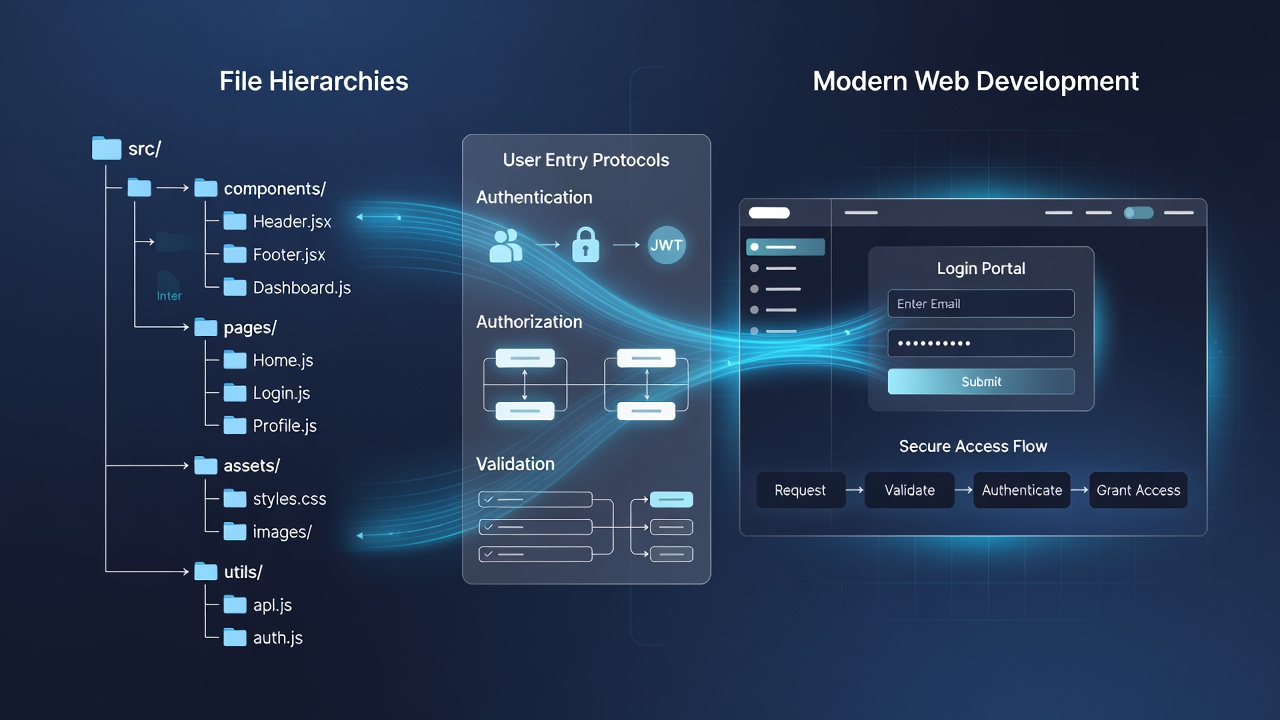
Developers arrange source code into layered directories that separate concerns such as presentation logic, data models, and utility functions, and this arrangement determines how entry protocols map incoming URLs or API calls to specific files without exposing internal paths. Observers note that component-based systems often place shared modules at root-level folders while feature-specific files reside in subdirectories, which allows entry handlers to apply scoped middleware before granting access. Studies conducted by the W3C working groups have shown that consistent hierarchy conventions improve maintainability across large codebases, particularly when multiple teams contribute simultaneously.
Entry protocols in turn reference these hierarchies through configuration files that list allowed paths and rewrite rules, and such mappings prevent direct file system exposure while still permitting dynamic content generation. Those who have examined production logs find that misaligned directory structures and protocol rules frequently produce 404 responses or unauthorized access attempts, prompting teams to audit both layers together during deployment cycles.
Security Considerations at the Intersection
Access control lists embedded within entry protocols check user credentials against permissions stored in configuration files that mirror the physical directory layout, and this alignment reduces the surface area for path traversal attacks. According to guidance published by the National Institute of Standards and Technology, organizations that synchronize file hierarchy policies with protocol validation layers report fewer incidents of unauthorized resource retrieval. In August 2026, updated compliance frameworks from Australian government cybersecurity agencies emphasized the same coordination when evaluating web applications for critical infrastructure use.
Encryption requirements and session management routines also tie into folder-level isolation, because developers place sensitive configuration files inside protected subdirectories that entry points explicitly restrict. Research indicates that applications enforcing such restrictions at both the file system and protocol levels experience lower rates of credential leakage compared with systems that handle security in only one layer.
Performance and Scalability Impacts
Load balancers and content delivery networks rely on predictable file hierarchies to cache assets efficiently, while entry protocols determine cache invalidation triggers based on directory change events. Metrics collected by monitoring platforms reveal that applications with shallow directory trees paired with protocol-level caching directives achieve higher throughput under concurrent user loads. Engineers who optimize both elements together often observe reduced database query volumes because static files serve directly from disk without repeated protocol translation steps.
Serverless architectures further illustrate the connection, because function entry points reference bundled code located in specific subfolders, and deployment pipelines that preserve hierarchy integrity avoid cold-start penalties. Data collected across cloud providers in 2026 demonstrates measurable improvements in response consistency when teams align packaging scripts with protocol routing tables.
Integration with Modern Tooling and Standards
Build tools such as bundlers and transpilers traverse file hierarchies to generate optimized bundles, and the resulting manifests feed directly into entry protocol configurations that route client requests to the correct bundle versions. Developers who maintain versioned directory structures alongside protocol headers that declare cache lifetimes prevent clients from receiving stale resources after updates. Industry analyses from the Mozilla Developer Network highlight how service worker registration paths must match the physical location of worker scripts to function correctly across different hosting environments.
API gateways add another dimension by exposing only designated entry endpoints while internal file hierarchies remain hidden, and configuration schemas enforce this separation through explicit allow lists. Those studying enterprise deployments note that organizations adopting OpenAPI specifications alongside strict directory conventions experience smoother onboarding for new contributors because endpoint documentation aligns with actual file locations.
Conclusion
The relationship between file hierarchies and user entry protocols continues to evolve as web platforms incorporate new standards for security, performance, and scalability, and coordinated management of both layers remains essential for reliable application delivery. Evidence gathered through academic studies and government technical guidelines underscores the value of treating these systems as interdependent rather than isolated concerns. Organizations that implement synchronized policies achieve consistent results across development, staging, and production environments while meeting regulatory expectations in multiple jurisdictions.