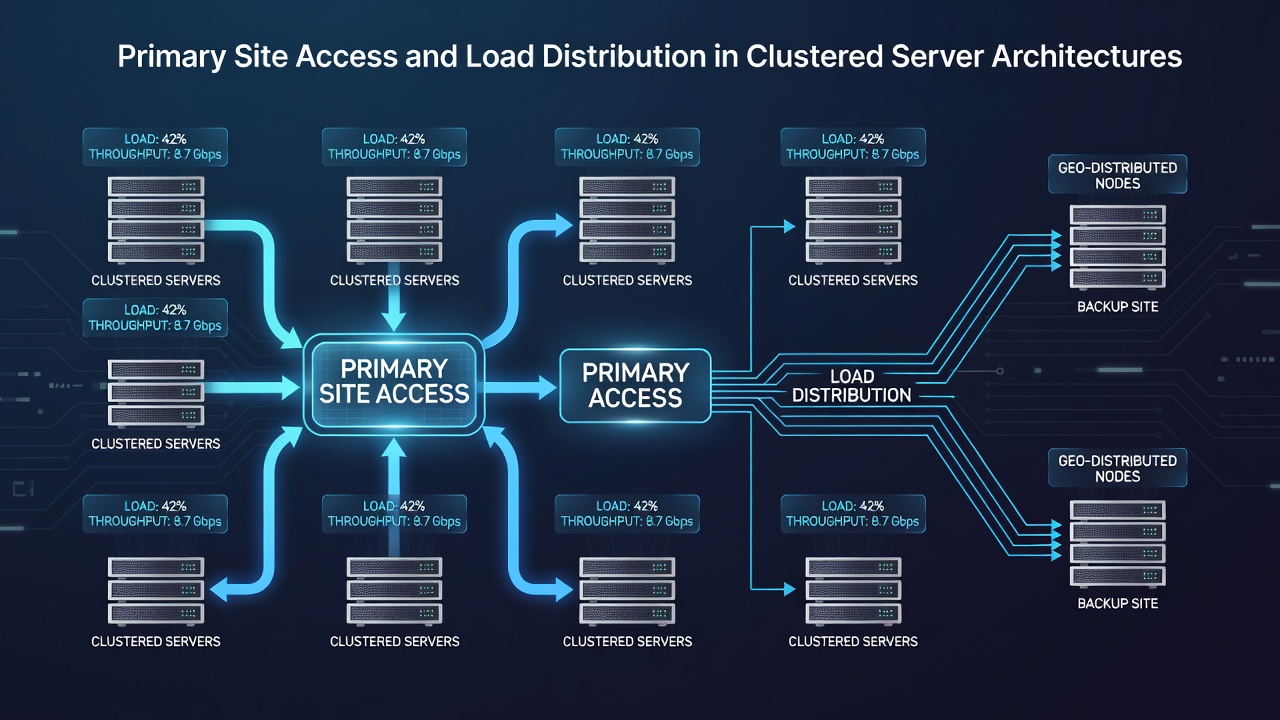
Primary Site Access and Load Distribution in Clustered Server Architectures
Clustered server architectures rely on coordinated primary site access points that route initial user requests into distributed computing environments, and load distribution mechanisms ensure traffic spreads evenly across nodes to maintain performance and availability. Experts in network infrastructure note that these systems form the backbone of high-traffic web services where single points of failure must be avoided through redundancy and intelligent routing. Primary site access typically begins at the domain name system level, where DNS records direct queries to load balancers or edge servers that represent the cluster entry. According to guidelines from the National Institute of Standards and Technology, effective primary access incorporates health monitoring that verifies active nodes before forwarding packets. This setup prevents requests from reaching unavailable servers during maintenance windows or unexpected outages.Core Components of Primary Access Routing
Load balancers sit at the front of clustered environments and handle session persistence, SSL termination, and protocol-aware distribution. Researchers at institutions across Europe have documented how these devices use algorithms such as round-robin, least-connections, and IP-hash to decide which backend server processes each request. Data from industry reports shows that least-connections methods reduce response times by up to 30 percent in environments with variable request sizes.
Virtual IP addresses often serve as the public face of the cluster, masking the actual server pool behind them. Observers note that this abstraction allows administrators to add or remove nodes without changing client configurations or DNS entries. In November 2026, several cloud providers plan to roll out enhanced anycast routing updates that further optimize primary site access latency across global data centers.
Load Distribution Algorithms and Their Implementation
Software-based load distribution runs on commodity hardware while hardware appliances deliver specialized acceleration for high-throughput scenarios. Studies from Australian research centers indicate that hybrid approaches combining both types achieve better fault tolerance during peak events. Active health checks probe server status at regular intervals and automatically reroute traffic when thresholds are breached.
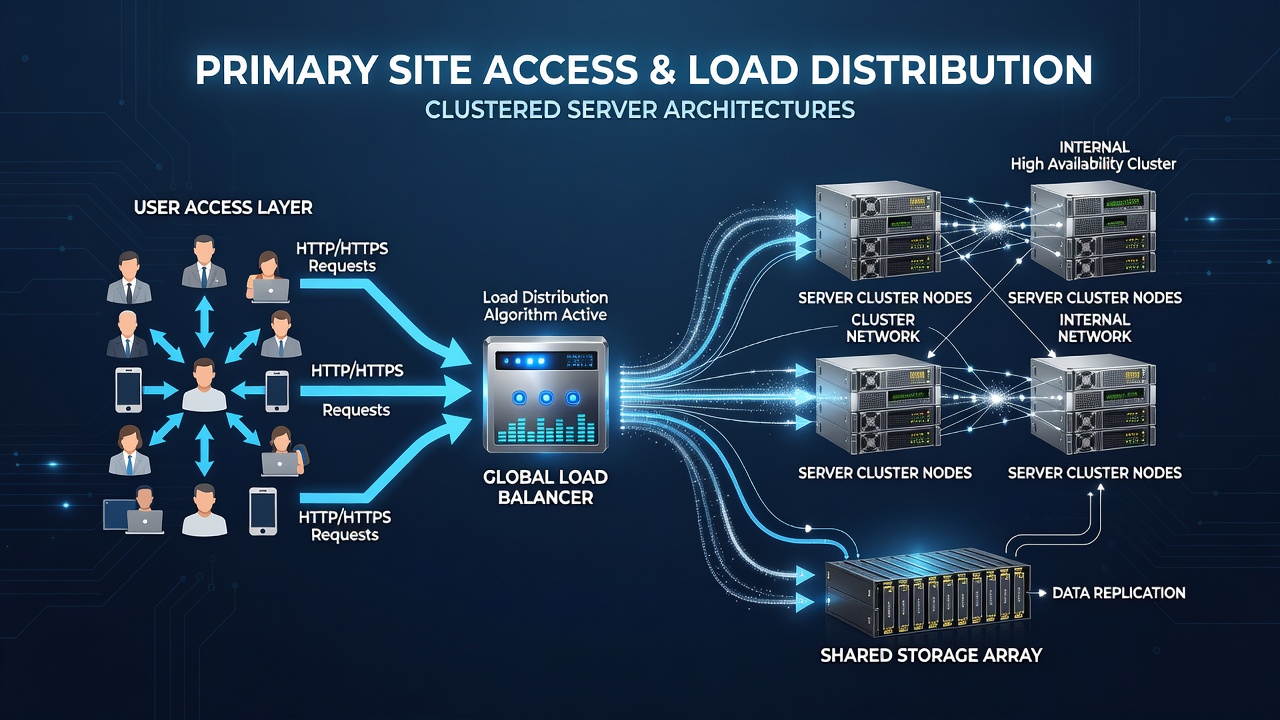
Weighted distribution assigns higher capacity servers more requests based on real-time metrics such as CPU load and memory usage. Those who manage large-scale deployments report that dynamic weighting prevents bottlenecks when traffic patterns shift rapidly. Connection draining techniques allow existing sessions to complete on a node before it is removed from rotation, preserving user experience during scaling operations.
Integration with Modern Hosting Frameworks
Container orchestration platforms extend traditional clustered models by treating pods as ephemeral nodes within the load distribution pool. Evidence from academic papers published in North American journals demonstrates that service meshes add another layer of primary access control through sidecar proxies that enforce policies at the application level. Geographic distribution further complicates routing decisions, requiring global server load balancing that factors in latency and regulatory compliance across regions.
Failover mechanisms activate when primary access points detect prolonged unresponsiveness, shifting traffic to secondary clusters with minimal interruption. Figures from Canadian government technology assessments reveal that properly configured systems recover within seconds rather than minutes when redundant paths exist. Monitoring tools aggregate logs and performance counters to provide visibility into distribution effectiveness and help identify misconfigurations before they affect end users.
Security and Scalability Considerations
Access control lists and rate limiting integrate directly with primary entry points to mitigate distributed denial-of-service attempts. Industry organizations focused on cybersecurity emphasize the importance of encrypting traffic between load balancers and backend servers to prevent interception within the cluster itself. Scalability tests conducted by university laboratories show linear performance gains when clusters expand horizontally provided the distribution layer keeps pace with added capacity.
Configuration management tools automate updates to routing rules and health check parameters, reducing human error in complex environments. Those responsible for maintaining these systems often rely on version-controlled scripts that allow quick rollback if changes produce unexpected behavior.
Conclusion
Primary site access combined with sophisticated load distribution enables clustered server architectures to deliver reliable, high-performance services at scale. Continued advancements in routing protocols and monitoring capabilities support growing demands from distributed applications while maintaining the resilience required for modern digital infrastructure.