
Exploring the Mechanics of Primary File Access in Establishing Web Presence Across Varied Hosting Environments
Primary file access forms the foundation for any web presence, as servers identify and deliver initial resources based on configured entry points in directories across hosting setups. Systems administrators configure these mechanisms differently depending on the environment, which affects how requests resolve to files like index documents or custom entry scripts. Data from industry reports shows that variations in file system permissions and virtual host settings determine response times and security postures in production deployments.
Shared Hosting Configurations and File Resolution
Shared hosting platforms rely on control panels that restrict direct server access while enforcing directory structures where primary files reside in public_html folders or equivalent paths. Users upload content through FTP or web-based interfaces, and the server matches incoming requests to predefined index files listed in configuration directives. Research indicates that Apache-based shared environments often prioritize index.html over index.php unless administrators adjust the DirectoryIndex directive, which alters the sequence of file checks during request handling. Those managing multiple sites on one account discover that subdomains inherit these rules unless virtual host overrides specify otherwise, leading to consistent yet limited flexibility in file access patterns.
Permissions play a central role here, since the web server process runs under a restricted user account that requires read access on primary files and execute permissions on script directories. Observers note that misconfigured ownership can block access entirely, prompting support tickets that resolve through ownership changes via command line tools available in many panels. In October 2026, updates to common control panel software introduced automated permission audits that flag potential issues before they affect live sites.
Dedicated and VPS Environments for Direct Control
Dedicated servers and virtual private instances grant root-level access, allowing administrators to edit core configuration files that govern primary file lookups across the entire system. Nginx installations, for instance, use location blocks and try_files directives to specify fallback sequences, which differ from Apache's approach by emphasizing explicit path mappings rather than automatic directory scanning. Evidence suggests that teams running high-traffic applications on these platforms often implement custom rewrite rules to handle legacy file structures while maintaining security through chroot jails or container isolation.
Those who studied deployment logs find that file access performance improves when primary documents load from SSD-backed storage with optimized inode caching, although network latency remains the dominant factor in global delivery. Configuration management tools automate these setups, ensuring that primary file directives stay synchronized across multiple server instances without manual intervention each time an update occurs.
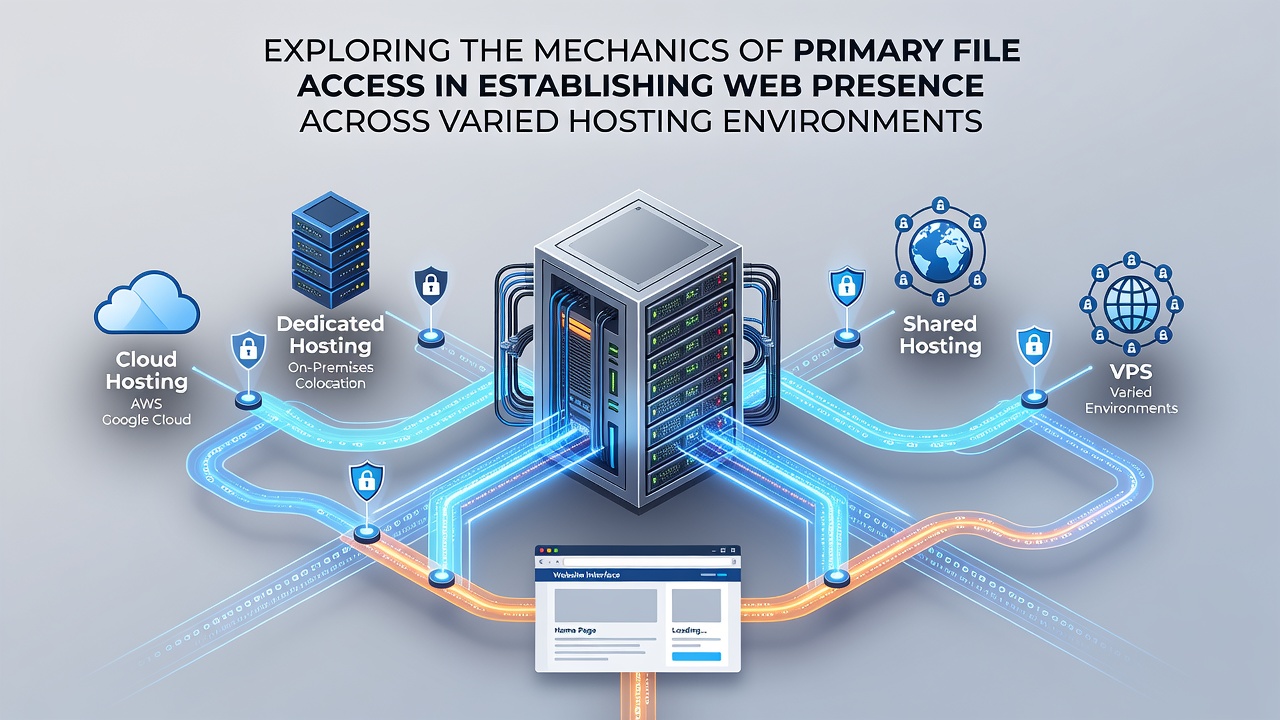
Cloud Platforms and API-Driven File Access
Cloud hosting environments shift primary file access toward object storage and serverless functions, where entry points map to bucket policies or function triggers instead of traditional directory trees. Providers such as those documented in NIST guidelines on cloud security emphasize role-based access controls that determine which identities can read or execute initial resources. Studies from European research institutions reveal that serverless setups reduce the surface area for file-based attacks by eliminating persistent directory structures altogether, although cold start delays can influence perceived load times for first requests.
Integration with content delivery networks further modifies access mechanics, as edge locations cache primary responses and apply origin shield rules that bypass central file systems for repeated queries. Administrators configure cache keys based on file metadata, which ensures that updates propagate correctly when source objects change through API calls rather than direct uploads. Data shows adoption of these patterns increased steadily through 2025, setting the stage for broader standardization efforts expected by late 2026.
Cross-Environment Compatibility Considerations
Teams migrating between hosting types encounter compatibility challenges when primary file directives fail to translate directly, such as differences in how Windows-based IIS servers handle default documents compared to Unix-derived systems. Container orchestration platforms address some of these gaps by packaging application code with explicit startup configurations that declare entry points independently of the underlying host. According to reports from the European Union Agency for Cybersecurity, standardized container images improve consistency while reducing configuration drift across development, staging, and production stages.
Monitoring tools track file access patterns in real time, generating alerts when unexpected primary resources receive requests that might indicate misrouting or security incidents. Those implementing such systems often combine log aggregation with automated remediation scripts that restore standard index behaviors without downtime.
Conclusion
Mechanics of primary file access vary systematically across shared, dedicated, and cloud hosting environments, shaped by configuration syntax, permission models, and storage architectures. Organizations maintain web presence through deliberate alignment of these elements with operational requirements, supported by ongoing refinements in tooling and standards.