Charting the Evolution of Default Access Points in Evolving Web Application Structures
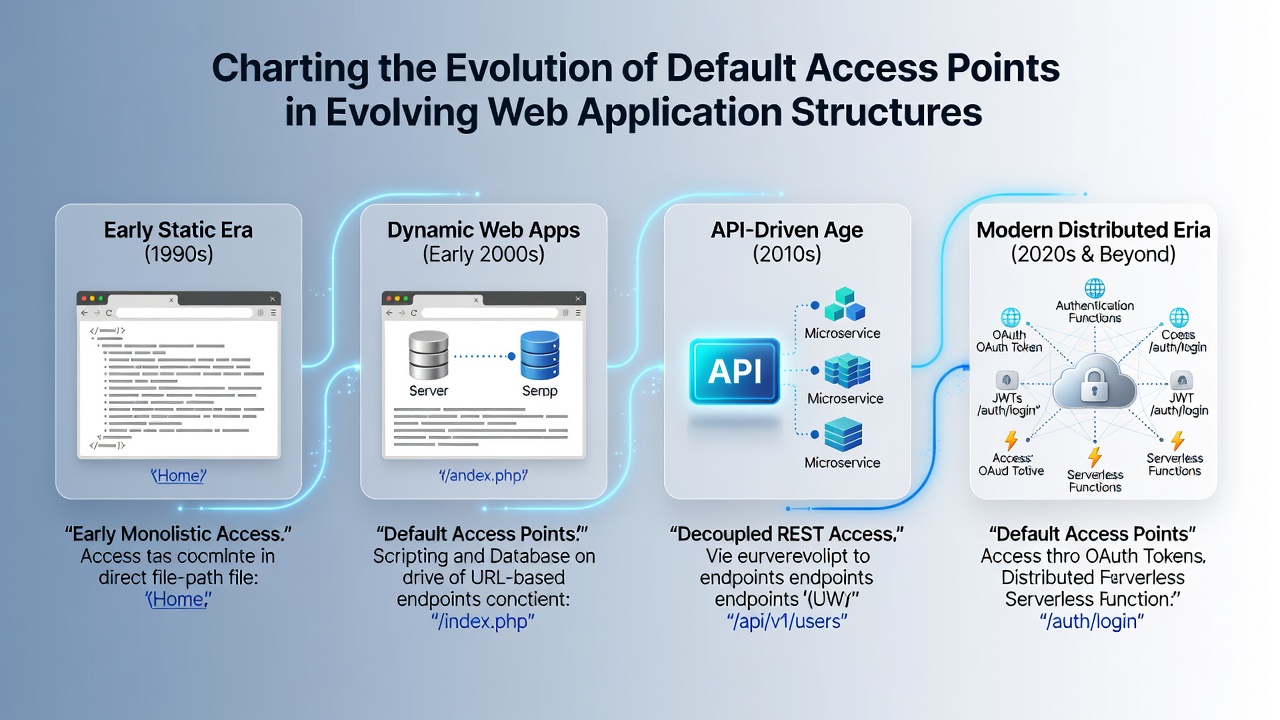
Default access points in web applications have shifted from simple file-based entry mechanisms to sophisticated routing systems that adapt to distributed architectures and user demands, and this progression reflects broader changes in how servers process requests while maintaining consistent entry experiences across platforms. Researchers tracking these developments note that early implementations relied on static files named according to server conventions, yet those conventions expanded as scripting languages introduced dynamic content generation without altering the core access pattern for users.
Origins in Static File Systems
Initial web servers defaulted to loading index.html or similar files when directories received requests without specific filenames, and this behavior emerged from early HTTP specifications that prioritized minimal configuration for content delivery. Data from the World Wide Web Consortium shows how these conventions standardized across implementations during the 1990s, allowing consistent navigation while servers handled file hierarchies automatically. Observers note that system administrators often configured alternatives such as default.htm or index.cgi to accommodate different operating systems and scripting environments, yet the underlying principle remained unchanged: provide a predictable entry without requiring explicit path specification.
Expansion Through Server-Side Scripting
As applications incorporated server-side processing, default access points integrated with languages like PHP and ASP, where files such as index.php became the new standard because they executed code before returning output. Studies from academic institutions including those affiliated with Canadian research networks indicate that this phase introduced query parameter handling at the entry point, which allowed personalization while preserving the directory-level default behavior. And because many frameworks built on these patterns, developers encountered fewer disruptions during migration from static sites to dynamic ones.
Framework-Driven Routing Changes
Modern web frameworks redefined default access points by separating them from physical files and mapping them instead to controller actions or component renders, and this abstraction supported single-page applications that load once before managing subsequent navigation internally. Evidence from industry reports compiled by the IEEE Computer Society highlights how client-side routers in libraries such as React and Vue established default routes that activate on root URL access, while server configurations still enforced fallback mechanisms for direct entry or refresh scenarios. Those who've examined deployment logs find that these systems often combine client and server logic so that an initial request reaches a designated handler before control transfers to the application layer.
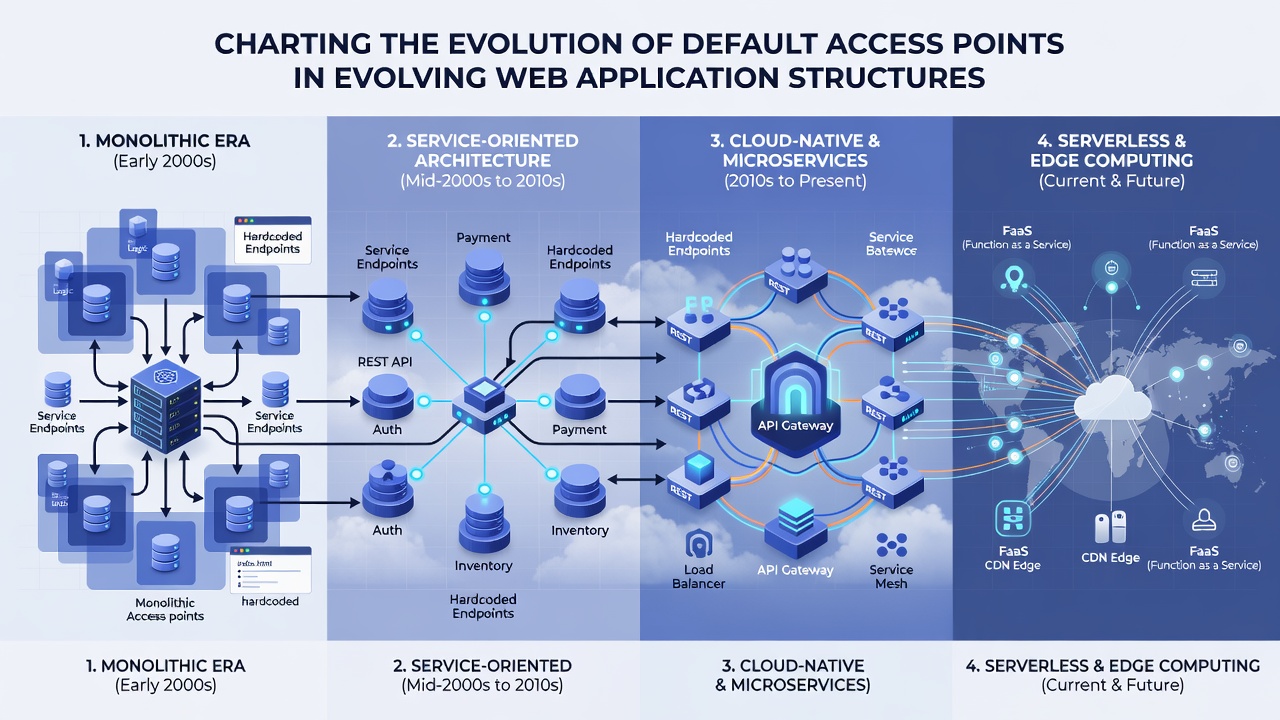
Containerized deployments further altered these patterns because orchestration tools like Kubernetes required explicit route definitions that pointed to service endpoints rather than individual files, and this shift became prominent as organizations scaled applications across multiple instances. According to documentation from the National Institute of Standards and Technology, security considerations around default endpoints prompted recommendations for explicit configuration rather than reliance on inherited server behaviors, reducing exposure from unchanged legacy settings.
Integration With API and Microservice Models
API-first architectures introduced default access points at the gateway level, where services such as API gateways route root requests to documentation endpoints or health checks before directing traffic to underlying microservices. Research published through Australian academic channels demonstrates that these gateways maintain backward compatibility by preserving traditional index behaviors for browser clients while exposing JSON responses for programmatic access. Observers note that load balancers and reverse proxies now play central roles in determining which service receives an unspecified request, and configuration files define the mapping rather than directory structures.
Current Trends and Developments in 2026
By September 2026, adoption of edge computing platforms has accelerated changes to default access points because functions deployed at network edges respond to root requests with minimal latency while integrating authentication and personalization logic. Figures from European research consortia reveal that serverless frameworks increasingly expose default handlers through manifest files that specify entry functions, and these specifications allow consistent behavior across providers. What's interesting is how progressive web applications leverage service workers to intercept root requests and serve cached content or trigger offline modes, extending the concept of default access beyond traditional server responses.
Conclusion
The trajectory of default access points demonstrates continuous adaptation to architectural demands while retaining core expectations of predictable entry, and ongoing standardization efforts ensure compatibility across evolving platforms. Data indicates that future iterations will likely emphasize declarative configurations and automated discovery mechanisms, allowing systems to adjust defaults based on context without manual intervention. Those monitoring these patterns recognize that the foundational requirement for reliable initial access remains constant even as implementation details diversify across environments.